Protect the Orcas
Travel Like a Pod
Orcas live in families, speak in dialects, and need our help.
Meet the Orca
The largest dolphin
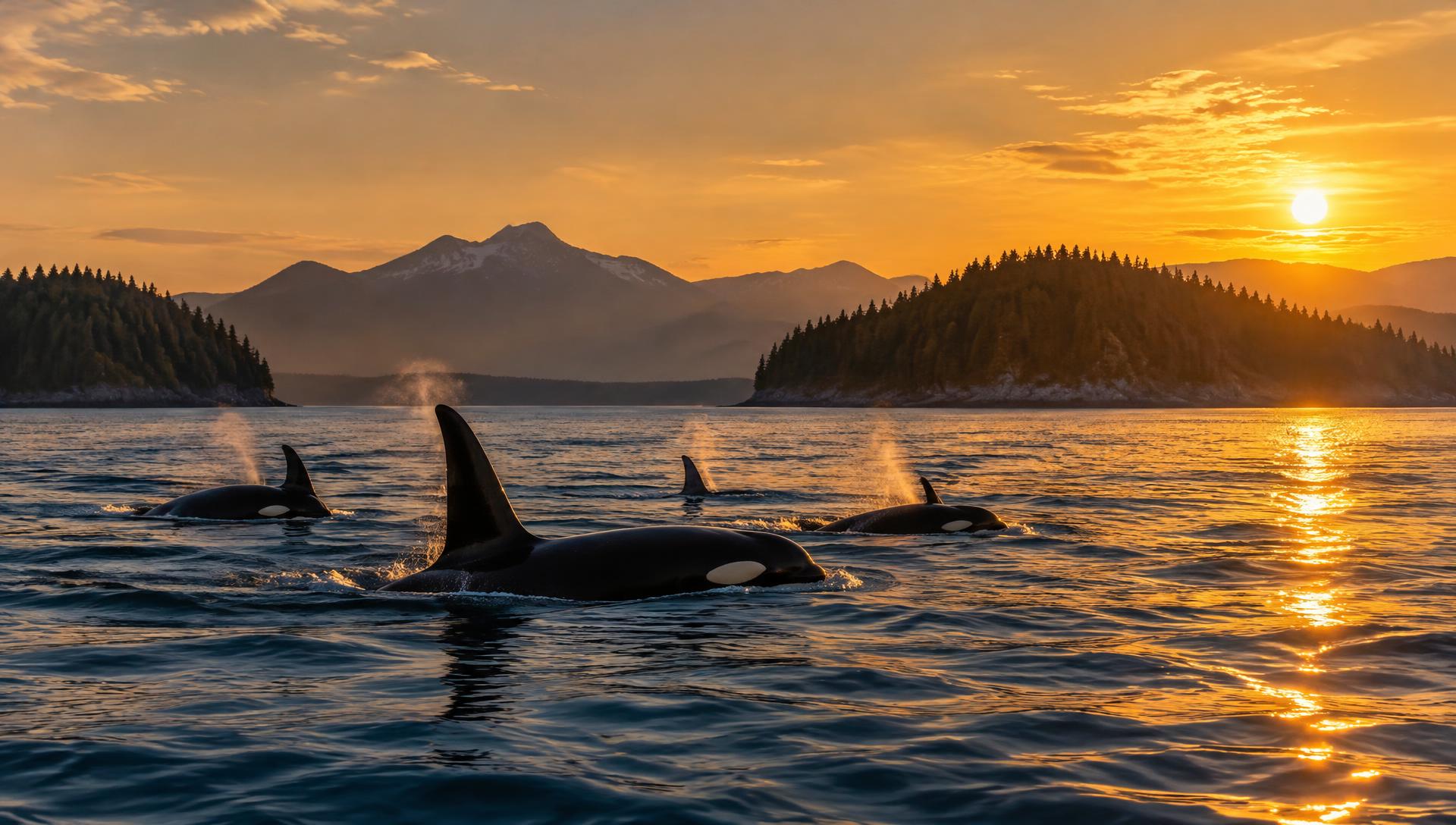
Orcas (Orcinus orca), also called killer whales, are the largest members of the dolphin family and live in every ocean.
Three Kinds of Orcas
Same waters, different lives
Residents
Eat fish, especially Chinook salmon.
Bigg's (transients)
Hunt seals, sea lions and porpoises.
Offshores
Live far out at sea and eat fish, including sharks.
Even in the same waters, these groups don't interbreed.
Family First
Led by matriarchs
Resident orcas stay with their mothers for life. Families are led by matriarchs, and grandmothers who are past breeding age guide their families to salmon and help the young survive.
How Orcas Talk
A language of clicks, calls and whistles
Fun fact: Bigg's orcas stay mostly quiet while hunting so their prey can't hear them.
Every Pod Has a Dialect
Calls passed down through generations
Each Resident pod has its own dialect, a set of calls passed down through generations. The Southern Residents (J, K and L pods) form one acoustic clan. Northern Residents have three clans (A, G and R).
Why Salmon Matter
Chinook are everything
Southern Residents depend mainly on Chinook salmon. When Chinook are scarce, the whales are in poorer condition and fewer pregnancies succeed.
The Southern Residents Today
A population worth protecting
76
whales as of July 1, 2026
27
J pod
15
K pod
34
L pod
The second year in a row of growth. Listed as Endangered in the US and Canada.
Source: Center for Whale Research census.
Main Threats
What they face
Not enough salmon
Toxic pollution
Boat noise and disturbance
Go Whale Watching
See orcas responsibly
See orcas responsibly, from shore or with operators who follow Be Whale Wise guidelines.
Shore watching in the San Juan Islands
Lime Kiln Point State Park. Check recent sightings before you go.
Orca Network sightingsPlan a whale-watching journey
The Orca Travel Team builds the whole trip around the whales — season, shoreline, responsible operators and everything in between.
Orca & Whale-Watching JourneysTour partner coming soon
We're selecting responsible operators.
Book a TourAlways follow Be Whale Wise guidelines.
How You Can Help
Small choices, real impact
- Watch from shore or with responsible operators.
- Support salmon recovery and choose sustainable seafood.
- Keep chemicals out of drains and waterways.
- Report sightings to Orca Network. Report strandings to the NOAA hotline: 1-866-767-6114.
Get orca sightings and new tour videos.
Sources: NOAA Fisheries, Center for Whale Research, peer-reviewed research.